Free Printable Pack
Hedgehog printable lesson pack
Free to print or save as PDF — no account needed. Go ad-free for $9.9 (one-time).
SizeRef Pro Pack
Hedgehog
This Pro Pack offers structured, multi-age activities to teach English vocabulary, science, and critical thinking using the fascinating hedgehog.
Learning Goals
- Identify and name the animal 'hedgehog' in English.
- Understand key facts about a hedgehog's defense mechanism.
- Develop early literacy skills through tracing and sentence building.
- Practice measurement and comparison using real-world dimensions.
Teacher / Parent Setup
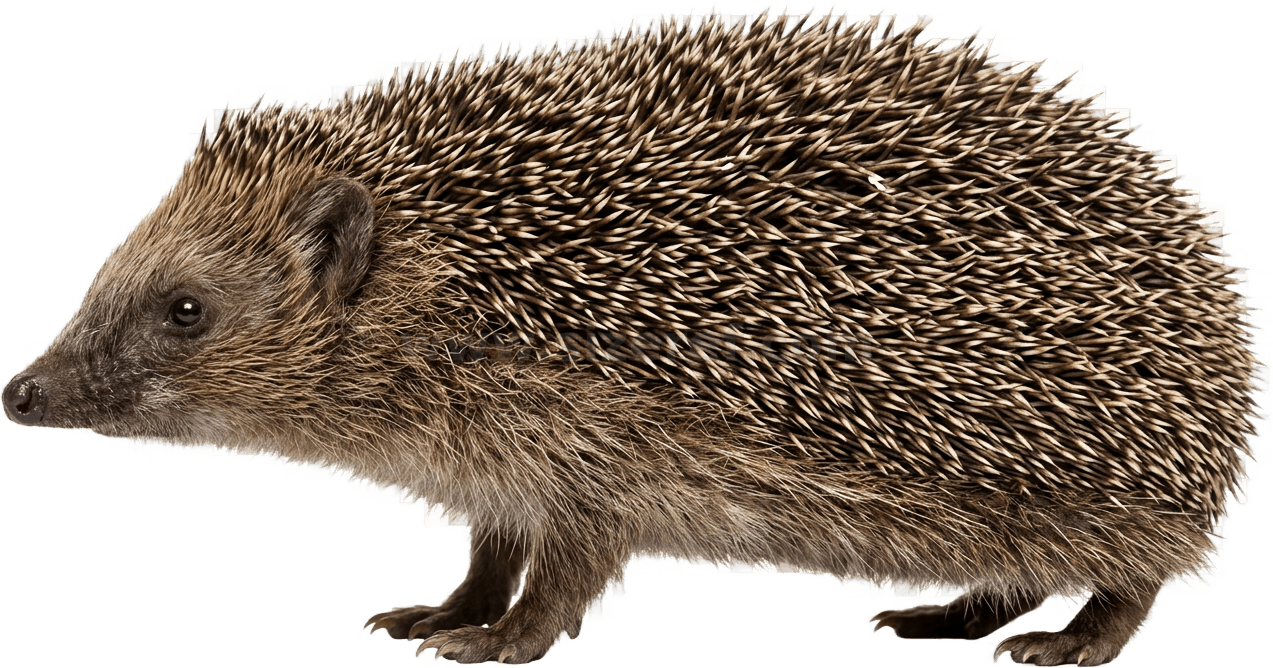
Print out the included picture of a hedgehog. Gather crayons or pencils. Prepare a ruler or measuring tape for the science section.
Curiosity Focus
Why is the Hedgehog built this way?
This pack includes a reviewed diagram poster and a Kids Ask Why page that turns curiosity into a short explanation and mini activity.
Page 2
Vocabulary Builder
Little Learners: Meet the Hedgehog!
Hedgehog
Trace the word: hedgehog.
Look at the picture. What do you see on the hedgehog's back? Point to its nose.
Pretend to be a hedgehog! Roll into a tight ball when you hear 'danger!' and unroll when you hear 'safe!'
Hedgehog Heroes: Reading & Writing
A hedgehog is a small animal.
It has about 5,000 tiny spikes.
The spikes help keep it safe.
Write a sentence about what a hedgehog uses its spikes for.
Word bank: hedgehog · spikes · safe · small · ball · animal
Hedgehog Science: Defense Mechanisms
Hedgehogs possess an incredible natural defense system. When threatened by predators like foxes or badgers, special muscles under their skin contract. This action pulls their spiky coat taut and causes them to roll into a tight, impenetrable ball. The thousands of sharp spines, which are modified hairs, point outwards in all directions. This spiky shield makes them very difficult and painful for attackers to handle,...
Why do you think a hedgehog's defense mechanism is better than trying to run away from a predator?
Page 3
Size Science Lab
Read the size clue
A hedgehog is about 250 millimeters (25.0 cm) wide. Imagine a regular dinner plate; a hedgehog is about as wide as that. It stands 130 millimeters (13.0 cm) tall, which is close to the height of a soda can. Its depth is 150 millimeters (15.0 cm), roughly the length of a small paperback book. So, it's a small, compact animal, perfect for rolling up!
Quick Check
How many millimeters wide is a hedgehog?
Estimate
Without measuring, find an object in the room that you think is about 13 cm tall. How close were you?
Is a hedgehog wider or taller? By how many centimeters?
Page 4
Scientific Diagram Poster
Diagram worksheet page
Plan a clear diagram for Hedgehog
Use this page to organize labels, parts, Kids Ask Why, context, and an answer legend before printing or teaching.
Review checklist
- Clear English labels
- No gibberish or fake logos
- Accurate Kids Ask Why panel
- Safe classroom-friendly image
- Good print readability
Page 5
Kids Ask Why Lab
Big Question
Why is the Hedgehog built this way?
The Hedgehog has body parts and behaviors that help it move, find food, stay safe, and live in its habitat.
How to diagram it
Connect one body part to one survival job with arrows and short labels.
Cause-and-effect arrows
1-minute activity
Choose one visible body part and ask what job it might help the animal do.
I noticed:
My answer in one sentence:
Draw your own explanation
Page 6
Comprehension + Drawing
1. What is the name of this animal?
2. How many spikes does a hedgehog have?
3. What do the spikes help the hedgehog do?
4. What does a hedgehog do when it feels scared?
Draw and compare
Draw a hedgehog rolled into a ball. Next to it, draw something you think is about the same size as a hedgehog.
Page 7
Answer Key + Teaching Notes
Answer Key
- Hedgehog.
- About 5,000 spikes.
- They help keep it safe.
- It rolls into a spiky ball.
- 250 millimeters or 25 centimeters.
Teaching Notes
- Encourage learners to point to parts of the hedgehog in the picture as you discuss them.
- For younger learners, focus on the words 'hedgehog', 'spikes', and 'safe'.
- For older learners, discuss the concept of 'defense mechanism' and 'predator'.
- Use real-world objects for size comparisons to make the dimensions tangible.
- Emphasize the 'a' article before 'hedgehog' as it is a singular, countable noun.
Extension Activity
Research other animals that use spikes or quills for defense, like a porcupine, and compare their defenses to the hedgehog's.
Unlock the full Pro library
This pack provides ready-to-use, age-differentiated activities and science explanations, eliminating the need for extensive lesson planning.