Reviewed diagram
Elephant Scientific Diagram
A clear visual learning page for Elephant, with size facts, simple labels, and a child-friendly science question.
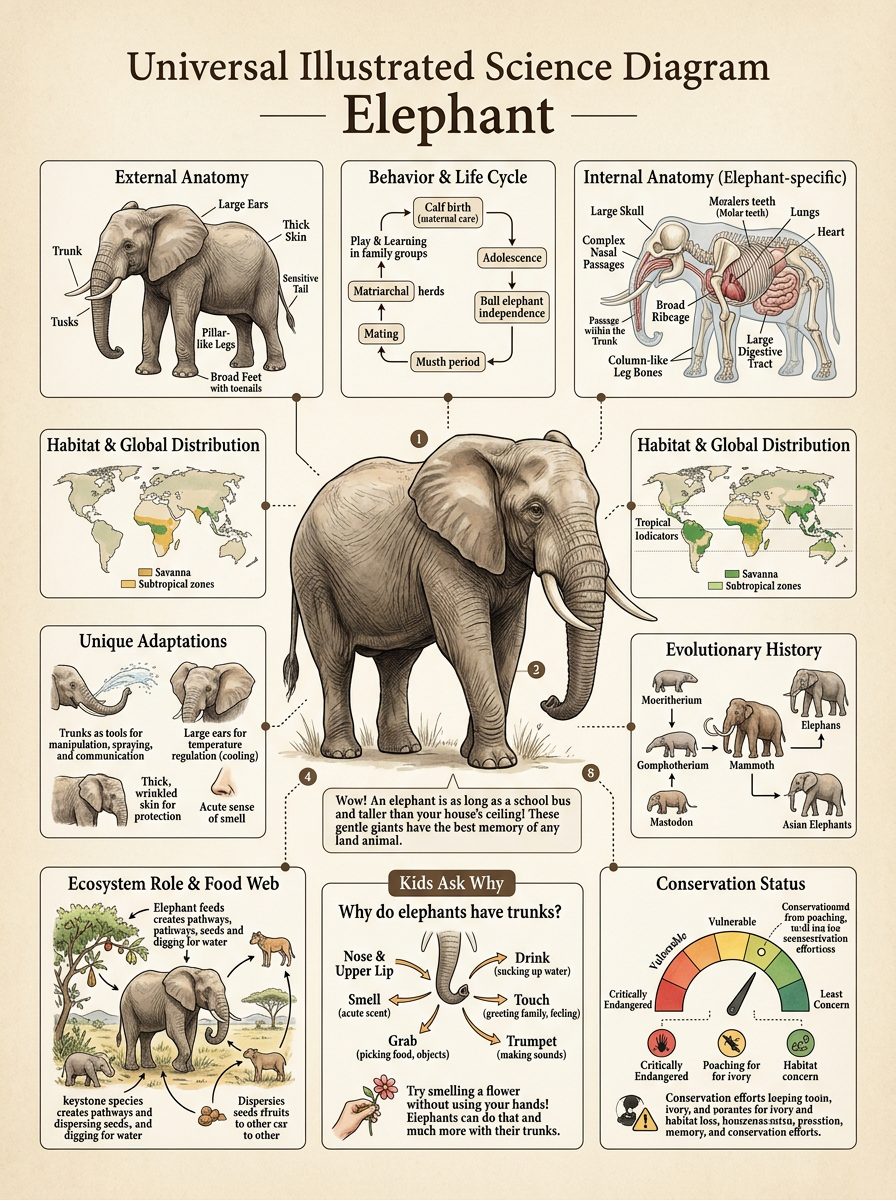
Batch reviewed generated diagram for Pro Pack use. Check labels, Kids Ask Why panel, anatomy/context modules, and print readability.
Open imageKids Ask Why
Why do elephants have trunks?
An elephant trunk is both a nose and an upper lip. It helps the elephant smell, breathe, drink, grab food, touch family members, and make sounds.
Diagram idea
Split the trunk into labeled functions: smell, drink, grab, touch, and trumpet.
1-minute activity
Use one hand as a pretend trunk to pick up a soft object, then discuss why a flexible tool is useful.
What kids learn
Simple science modules
External anatomy with labeled body parts and magnified detail windows
Behavior patterns and life cycle shown as a clear flowchart
Subject-specific animal internal anatomy or body systems, never human anatomy
Habitat, climate, and global distribution map
Unique adaptations such as movement, senses, defense, or hunting tools
Printable pack
Turn this diagram into a lesson pack
Pro packages the diagram with worksheets, answer keys, vocabulary practice, and parent or teacher notes.